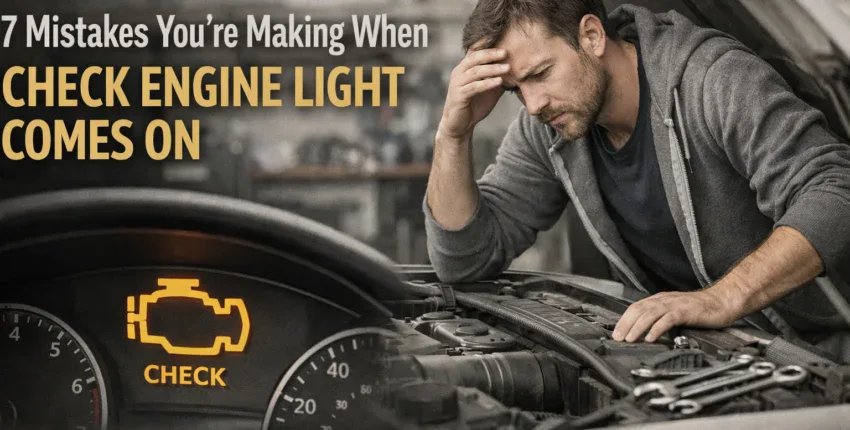
We’ve all been there. You’re driving down Highway 49, enjoying the crisp Auburn air, maybe heading to the lake or just running errands near Old Town, when suddenly: pop. That little orange glow appears on your dashboard.
Your heart sinks. "How much is this going to cost?" "Is my car about to explode?"
At Auburn Service Center, we see that little light every single day. We’re a family-owned shop, and we pride ourselves on being the kind of auto repair near me that people actually trust. We know that when that check engine light on notification hits your dash, it’s stressful. But here’s the honest truth: the light itself isn't the problem; it’s how you react to it that usually determines the size of your repair bill.
To help you keep your vehicle on the road and your wallet full, we’ve put together the seven biggest mistakes we see drivers in Placer County make when that light starts staring them down.
1. Panicking and Immediately Replacing Parts
This is the number one mistake, and it's often fueled by a quick trip to a big-box auto parts store. You go in, they scan your car for free, and tell you, "The code says it’s an oxygen sensor." You buy the $150 sensor, spend your Saturday afternoon under the hood, and guess what? Two days later, the light is back on.
Research shows that over 90% of check engine light repairs are misdiagnosed or unnecessary because people "throw parts" at a code. At Auburn Service Center, we treat a diagnostic code like a symptom, not a diagnosis. If you have a cough, a doctor doesn’t immediately perform lung surgery; they check if it’s a cold, allergies, or something else. We do the same for your car. Replacing a part without knowing why it failed is just a guess, and guesses are expensive.
2. Assuming the Code Is the "Answer"
When people ask, "what does check engine light mean," they usually expect a specific answer like "broken spark plug." In reality, the OBD2 (On-Board Diagnostics) system provides a code that points to a system, not necessarily a specific component.
Take the infamous P0420 code. Most people see this and assume they need a new catalytic converter: a repair that can easily cost $1,300 or more. But here’s an honest insider tip: only about 30-40% of the time is the converter actually dead. The rest of the time? It’s an exhaust leak, a faulty sensor, or even low-grade fuel.
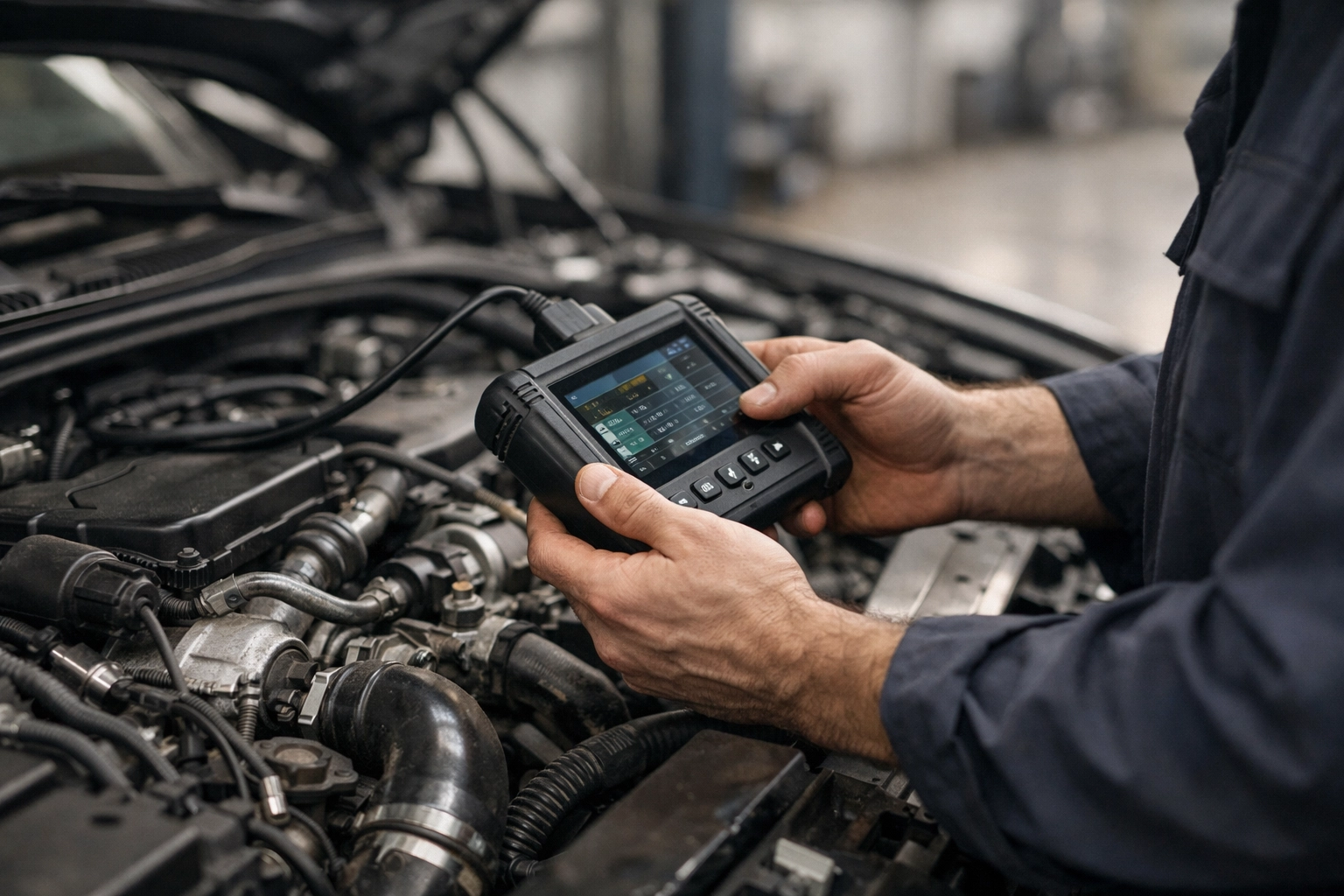
Before you commit to a major repair, you need a technician who looks at the "live data." We look at how the sensors are breathing in real-time to see the full story. If you’re worried about a major component failing, check out our guide on when it is time for an engine rebuild or replacement.
3. Ignoring the "Tighten the Gas Cap" Rule
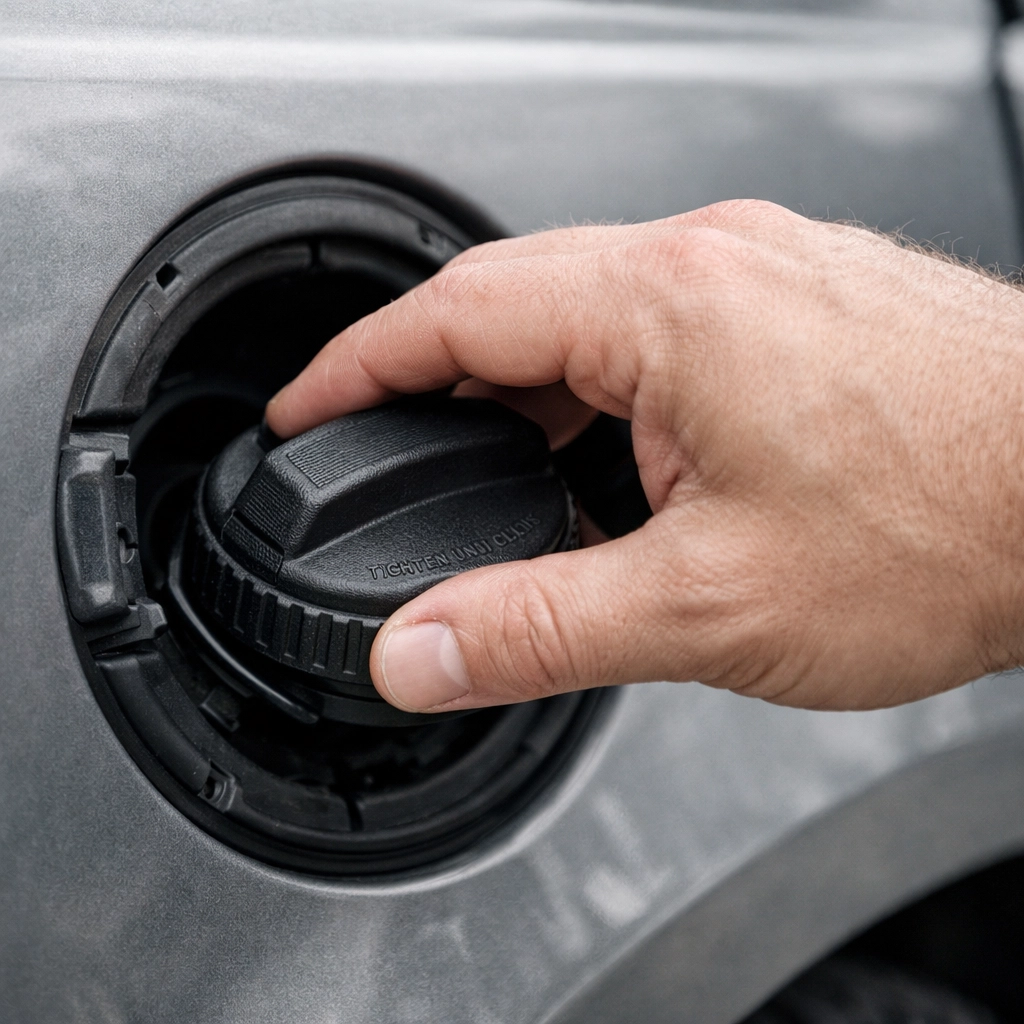
It sounds like an old wives' tale, but it’s 100% true. Your car’s computer is constantly running a "pressure test" on your fuel system to make sure no gasoline vapors are escaping into the atmosphere. If your gas cap is loose, cracked, or just plain missing, the system will lose pressure, and the light will come on.
Before you call us or search for "auto repair near me," pull over and make sure your gas cap is clicked tight. If it was loose, it might take a few drive cycles for the light to turn off on its own. It’s the simplest, $0 fix in the automotive world, and it’s a great example of why regular general maintenance matters.
4. Failing to Distinguish Between a Solid and Flashing Light
This is a big one for your safety. Not all check engine lights are created equal.
- Solid Light: This means there is a problem that needs attention soon. It’s not an emergency, but you shouldn't wait weeks to get it checked.
- Flashing Light: This is the "Stop Driving Right Now" signal. A blinking light usually indicates an "engine misfire" so severe that it’s dumping raw fuel into your exhaust. This can melt your catalytic converter in minutes and potentially lead to an engine fire.
If that light is flashing, pull over safely and call a tow truck. It’s much cheaper to pay for a tow to our shop in Auburn than it is to replace an entire engine or exhaust system.
5. Thinking a $20 Scanner Makes You a Pro
We love that technology has become so accessible. You can buy a cheap OBD2 scanner online for the price of a pizza. These are great tools for staying informed, but they have limits.
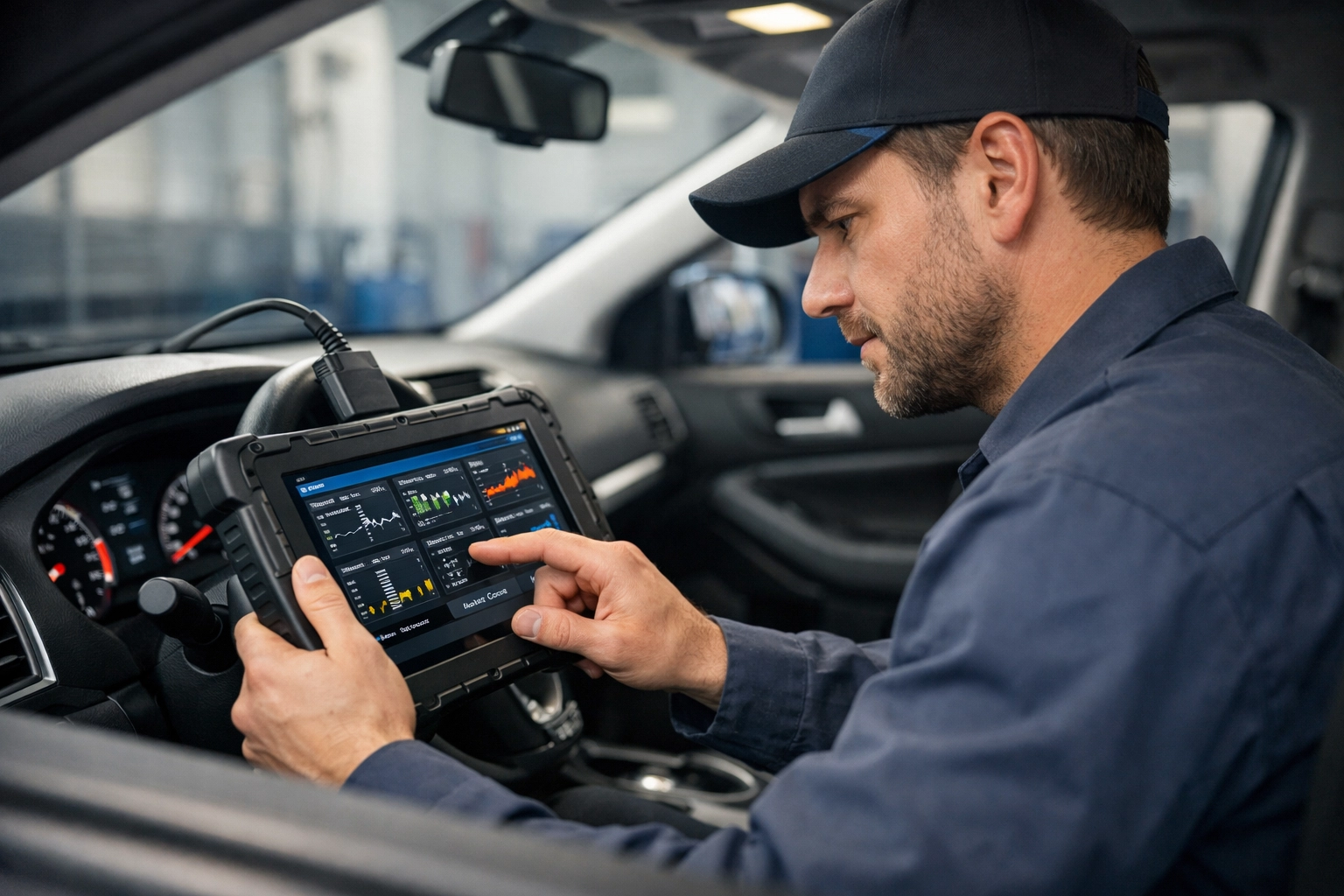
A cheap scanner will give you a code, but it won't show you the "freeze frame data": the exact conditions (speed, temperature, engine load) the car was under when the light tripped. Professional-grade equipment, like what we use at Auburn Service Center, allows us to perform "bi-directional testing." This means we can tell the car’s computer to turn certain parts on or off to see how they react.
Having the code is like having a map; having the right diagnostic tools and experience is like having a GPS that tells you exactly where the potholes are. For a deeper look at what goes into professional diagnostics, read about what's involved in a comprehensive tune-up.
6. The "Reset and Forget" Strategy
We’ve seen folks disconnect their battery or use a scanner to clear the light just before they head to the smog station or go on a road trip. Here’s the problem: you aren't fixing the issue; you’re just hiding the evidence.
Your car’s computer has "monitors" that need to complete specific tests. When you clear the light, those monitors reset to "Not Ready." If you take it for a smog check, you’ll fail instantly. Worse yet, the underlying problem is still there, likely causing your engine to run inefficiently. This can lead to poor gas mileage and carbon buildup. Dealing with it early is part of the importance of regular fuel system maintenance.
7. Waiting Until "Symptoms" Appear
"The light is on, but the car drives fine." We hear this all the time.
Modern cars are incredibly smart. When a sensor fails, the computer often enters a "limp mode" or uses "substitute values" to keep the car running. It feels fine to you, but behind the scenes, the engine might be running too hot, or the transmission might be shifting harder than it should.
Waiting until you feel a shudder, hear a knock, or see smoke means you’ve moved from a simple sensor replacement to a major mechanical repair. Think of the check engine light as your car’s early warning system. It’s trying to save you money by catching the problem while it’s still small.

Why Trust Auburn Service Center?
We know that finding auto repair near me can feel like a gamble. You want someone who won't just read a code and hand you a massive bill. At Auburn Service Center, we treat every car like it belongs to our own family. We take the time to explain the "why" behind the "what."
Whether your check engine light on situation is just a loose gas cap or something more complex like a transmission issue, we’re here to give you an honest assessment and get you back on the road safely.
Don't let a little light ruin your week. If that orange glow is staring you in the face, give us a call or swing by the shop. We’ve been serving the Auburn community for years, and we’d love to help you out.
Ready to get that light checked? Contact us today or check out our full list of automotive repair services in Auburn, CA.